Why Modern Digital Agencies Need a Client Portal Instead of Endless Email Threads
Digital agencies thrive on communication. Every project, campaign, revision, invoice, and approval depends on timely collaboration between agency teams and clients. Yet many agencies still rely on long email chains to manage these interactions.
While email remains useful for notifications and introductions, it becomes increasingly inefficient as an agency grows. Messages get buried, attachments are duplicated, approvals are lost, and team members struggle to find the latest information. These small inefficiencies compound over time, reducing productivity and frustrating both clients and employees.
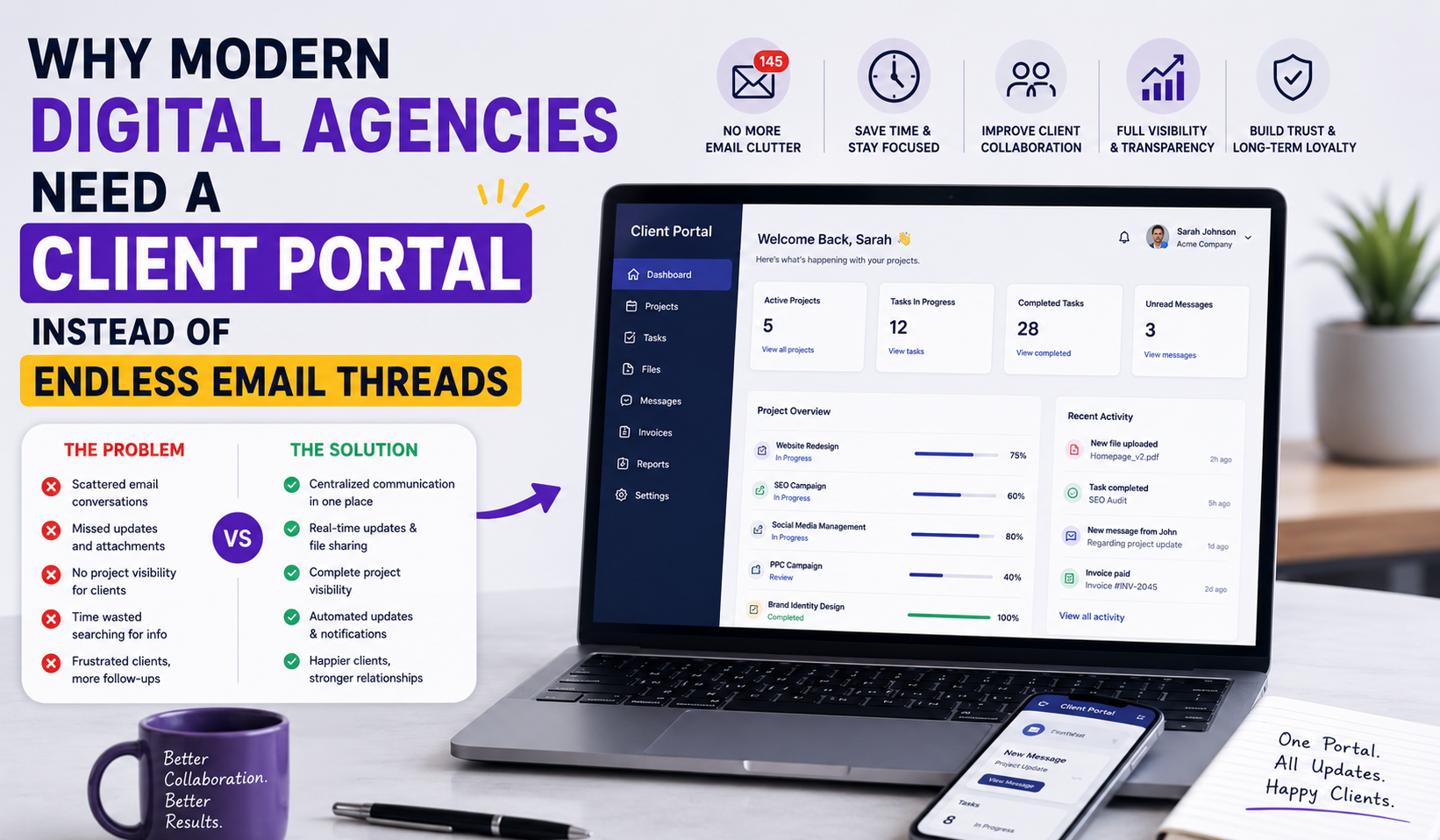
A client portal for agencies addresses this challenge by creating a centralized workspace where conversations, documents, invoices, project updates, and approvals are organized in one secure location. Instead of searching through hundreds of emails, everyone knows exactly where to find the information they need.
For agencies managing multiple clients simultaneously, a client portal isn’t just a convenience it becomes an essential part of delivering a consistent, professional service experience.
What Is a Client Portal?
A client portal is a secure online workspace that gives clients controlled access to the information and services they need throughout a project.
Rather than relying on scattered communication channels, agencies can provide clients with one place to:
- View project progress
- Upload files
- Approve deliverables
- Access invoices
- Submit requests
- Review reports
- Communicate with the agency
This centralized approach improves transparency while reducing administrative work for both the agency and its clients.
Instead of asking, “Can you resend the latest proposal?” or “Which version did we approve?”, clients can access the latest information whenever they need it.
Why Email Stops Working as Agencies Grow
Email works well when managing a handful of projects. However, as agencies expand their client base, communication complexity increases significantly.
Common challenges include:
Lost Conversations
Important decisions often disappear inside long email threads involving multiple stakeholders.
New team members may struggle to understand project history because conversations are spread across dozens of messages.
File Version Confusion
Clients frequently download outdated files or respond to older attachments.
Agencies then spend valuable time confirming which version should be used instead of moving projects forward.
Delayed Approvals
Approvals buried inside email chains can delay campaigns, content production, website launches, or advertising schedules.
A simple approval taking several days can affect multiple projects simultaneously.
Limited Visibility
Managers often have no clear overview of ongoing client communication.
Without centralized records, maintaining accountability becomes increasingly difficult.
The Business Impact of Better Client Communication
Communication directly influences client satisfaction.
Clients rarely judge agencies solely on creative quality or technical expertise. They also evaluate responsiveness, transparency, and professionalism.
A structured communication process helps agencies:
- Build trust
- Reduce misunderstandings
- Respond faster
- Deliver projects on schedule
- Improve client retention
- Increase referrals
When clients always know where to find updates, confidence in the agency naturally grows.
This operational consistency often becomes a competitive advantage, especially for agencies handling recurring services such as SEO, content marketing, paid advertising, web development, or social media management.
How a Client Portal Simplifies Agency Operations
Instead of switching between email, cloud storage, messaging apps, spreadsheets, and invoicing platforms, agencies can centralize client interactions within a single workflow.
A modern agency client portal typically supports:
Project Updates
Clients can monitor progress without requesting status updates.
This reduces repetitive communication while improving transparency.
Secure File Sharing
Creative assets, reports, contracts, proposals, and deliverables remain organized in one secure location.
Everyone accesses the same version, reducing unnecessary revisions.
Approval Workflows
Approvals become structured rather than hidden inside lengthy email conversations.
This speeds up project delivery while creating a clear audit trail.
Centralized Communication
Questions, responses, feedback, and project discussions remain attached to the relevant client or project instead of being scattered across inboxes.
Why Client Experience Matters More Than Ever
Modern clients expect digital experiences similar to those provided by banking platforms, eCommerce businesses, and SaaS products.
They want:
- Self-service access
- Instant visibility
- Secure document sharing
- Faster responses
- Clear project timelines
- Professional communication
Agencies that continue relying exclusively on email often struggle to meet these expectations.
Providing clients with a dedicated workspace demonstrates operational maturity and reinforces confidence in your processes.
For agencies looking to streamline communication and provide a centralized experience for clients, implementing a dedicated client portal can help reduce email dependency while improving collaboration and project visibility. Solutions such as DSP CRM’s client portal are designed specifically for agency workflows, allowing teams to keep conversations, documents, approvals, and project updates in one secure place instead of scattered across multiple email threads.
Seven Ways a Client Portal Helps Agencies Scale Efficiently
As agencies grow, the volume of client communication grows with them. A client portal isn’t just a replacement for email—it becomes the operational hub that supports consistent service delivery, stronger client relationships, and more efficient internal processes.
1. Faster Client Onboarding
First impressions matter.
Traditional onboarding often involves multiple emails requesting contracts, questionnaires, brand assets, access credentials, and kickoff meeting details. This fragmented process can confuse clients before work even begins.
A client portal streamlines onboarding by keeping everything in one place. Agencies can organize welcome documents, onboarding forms, project timelines, and shared resources in a structured environment.
The result is a smoother experience for both the agency and the client, reducing delays and helping projects start faster.
2. Better Project Visibility
One of the most common client questions is:
“What’s the current status of my project?”
Without a centralized system, answering that question often requires checking project management tools, internal chat messages, or email conversations.
A client portal gives clients real-time visibility into milestones, deliverables, completed tasks, and upcoming work. Instead of waiting for updates, clients can check progress whenever they need it.
Greater transparency reduces uncertainty and minimizes unnecessary follow-up emails.
3. Centralized Document Management
Digital agencies handle a wide variety of files, including:
- Brand guidelines
- Design mockups
- Website assets
- Content drafts
- SEO reports
- Contracts
- Invoices
- Performance dashboards
Storing these assets across multiple platforms increases the risk of confusion and version-control issues.
A centralized portal provides one secure location where clients and agency teams can access the latest approved documents without searching through email attachments.
4. More Efficient Feedback and Approvals
Creative work often requires multiple review cycles.
When feedback arrives through scattered email replies, messaging apps, or phone calls, it’s easy for important comments to be overlooked.
A client portal creates a structured approval process where feedback remains connected to the relevant deliverable. This improves accountability, shortens review cycles, and helps teams implement revisions more efficiently.
For agencies delivering recurring services, faster approvals also improve scheduling and resource planning.
5. Improved Client Trust
Transparency builds confidence.
Clients appreciate knowing where projects stand, what actions are pending, and who is responsible for each task.
When communication is organized and accessible, agencies appear more professional and reliable.
This level of visibility strengthens long-term relationships, increases retention, and encourages referrals from satisfied clients.
6. Increased Team Productivity
Agency employees spend a surprising amount of time searching for information.
Instead of delivering client work, team members often need to locate email attachments, verify approvals, or answer repetitive status requests.
By centralizing communication and project information, a client portal reduces administrative work and allows specialists to focus on higher-value activities.
This operational efficiency becomes increasingly important as agencies scale.
7. Better Data Security
Email wasn’t designed to serve as a long-term document management system.
Sensitive information—including contracts, financial documents, login credentials, and client files—can easily become difficult to manage securely when distributed across inboxes.
A secure client portal provides controlled access, helping agencies protect confidential information while giving clients convenient access to the resources they need.
Email vs. Client Portal: Which Works Better?
| Area | Client Portal | |
| Project updates | Scattered across threads | Organized in one dashboard |
| File sharing | Multiple attachments and versions | Centralized document library |
| Client approvals | Difficult to track | Structured approval workflow |
| Communication history | Fragmented | Complete client timeline |
| Client experience | Reactive | Transparent and self-service |
| Team collaboration | Limited visibility | Shared operational workspace |
| Information retrieval | Manual searching | Quick and organized access |
While email remains valuable for notifications and announcements, a client portal provides the structure agencies need to manage ongoing client relationships more effectively.
Common Signs Your Agency Has Outgrown Email
Many agency owners don’t realize communication has become a bottleneck until it starts affecting client satisfaction.
Your agency may benefit from a dedicated client portal if you regularly experience:
- Clients requesting files you’ve already shared.
- Long email threads with multiple stakeholders.
- Delayed approvals that slow project delivery.
- Team members searching for previous conversations.
- Duplicate client requests.
- Confusion over the latest document version.
- Difficulty tracking project history.
- Growing administrative workload as client numbers increase.
If several of these challenges sound familiar, it’s a strong indication that your current communication process no longer supports your agency’s growth.
How to Successfully Introduce a Client Portal
Implementing a client portal doesn’t have to disrupt your existing processes. A gradual rollout often leads to better adoption by both clients and internal teams.
Consider these best practices:
Start with New Clients
Introduce the portal as part of your onboarding process. New clients will naturally adopt it as their primary communication channel.
Define Clear Communication Guidelines
Explain what should happen inside the portal, such as project discussions, approvals, file sharing, invoices, and support requests. Reserve email for notifications or urgent updates.
Organize Information Logically
Create consistent folders, project sections, and naming conventions so clients can easily locate documents and updates without assistance.
Train Your Team
Internal adoption is just as important as client adoption. Encourage account managers, project managers, designers, developers, and marketers to use the portal consistently for client-facing communication.
Gather Client Feedback
Ask clients about their experience after the first few weeks. Their feedback can help refine workflows and improve usability over time.
Choosing the Right Client Portal
Not every client portal is designed for service-based businesses.
When evaluating a solution, agencies should look for features such as:
- Secure client access
- Project visibility
- File management
- Task tracking
- Invoice access
- Approval workflows
- Team collaboration
- CRM integration
- Reporting and analytics
- Scalability as the agency grows
An ideal solution should simplify operations rather than adding another disconnected tool to the agency’s technology stack.
For agencies that want to centralize client communication, project updates, billing, and collaboration, a platform such as DSP CRM’s Client Portal can help replace fragmented email workflows with a single, organized workspace built specifically for agency operations.
Frequently Asked Questions
What is a client portal for agencies?
A client portal is a secure online workspace where agencies and clients can collaborate. It centralizes project updates, file sharing, approvals, invoices, and communication in one place.
How does a client portal improve client communication?
Instead of relying on scattered email conversations, clients have a single location to view project progress, submit requests, access documents, and communicate with their agency, reducing confusion and delays.
Can small agencies benefit from a client portal?
Yes. Even agencies with a small client base can improve professionalism, streamline onboarding, reduce repetitive administrative work, and create a more organized client experience.
Is a client portal better than email?
A client portal complements email rather than replacing it entirely. Email works well for notifications and introductions, while a client portal is better suited for ongoing collaboration, document management, approvals, and project visibility.
What should agencies look for in a client portal?
Key capabilities include secure access, document sharing, project management, communication tools, approval workflows, billing integration, CRM functionality, analytics, and scalability.
Conclusion
Exceptional client service isn’t built on creative work alone, it’s also shaped by the systems that support communication, collaboration, and transparency.
As agencies grow, scattered email threads become harder to manage, slowing projects and creating unnecessary friction for both clients and teams. A centralized client portal solves these challenges by giving everyone a single source of truth for conversations, files, approvals, invoices, and project updates.
Agencies that modernize their client communication processes are better positioned to improve efficiency, strengthen trust, and scale without sacrificing the quality of their service. Investing in a purpose-built client portal is more than a technology upgrade; it’s a strategic step toward building a more organized, client-focused, and sustainable agency.